
In Spain, the prices of rolling tobacco are not set by cities or autonomous communities. The Comisionado para el Mercado de Tabacos publishes the official rates in the BOE (Boletín Oficial del Estado), and these prices apply uniformly across all expendedurías (estancos) in the mainland and the Balearic Islands. Therefore, talking about variations between Madrid, Barcelona, or Seville amounts to comparing strictly identical prices.
The real dividing line lies elsewhere: between the Peninsula and the territories with special tax regimes, namely the Canary Islands, Ceuta, and Melilla.
Rolling tobacco prices in the Peninsula: a unique rate from Madrid to Seville
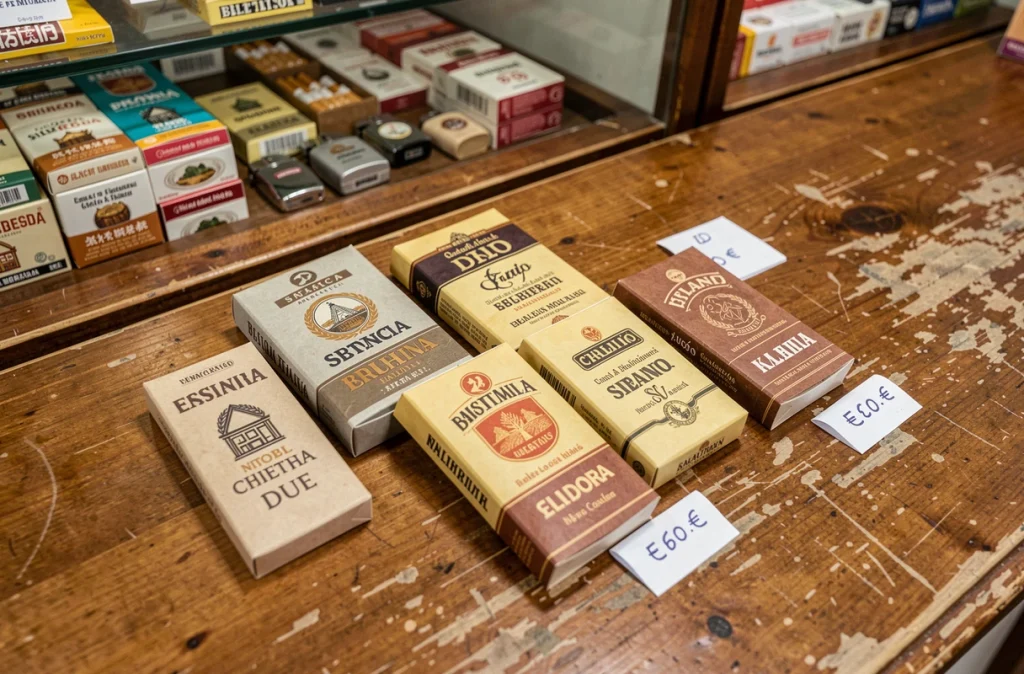
The resolutions published in the BOE in July and August 2026 confirm that each reference of rolling tobacco (picadura de liar) has an identical retail price across the entire Peninsula and the Balearic Islands. A 30 g packet of a given brand costs exactly the same in an estanco in Bilbao, Valencia, or Malaga.
This mechanism is based on a simple logic: the manufacturer or importer proposes a price, the Comisionado validates it, and the resolution in the BOE makes it mandatory. No tobacco shop can apply discounts or surcharges. The discrepancies that some travelers believe they observe between cities generally stem from differences in available brands or formats (30 g packets, 40 g, larger jars), not from a geographical variation in pricing.
The most recent data, from the resolutions of July 25 and August 1, 2026, detail the rolling tobacco prices in Spain by city in 2026 and show that the pricing grid remains national, with no exceptions for major urban areas.
Canary Islands, Ceuta, and Melilla: the only territories where prices differ
The BOE resolutions explicitly distinguish between two pricing grids: one for the Peninsula and the Balearic Islands, and another for Ceuta and Melilla. The Canary Islands benefit from their own tax regime, the IGIC (Impuesto General Indirecto Canario), which replaces the mainland VAT and the standard tobacco excise duties.
This special regime results in significantly lower prices for tobacco products, including rolling tobacco. For the same 30 g packet, the difference with the Peninsula can be several euros, depending on the brand.
Why these territories pay less
The taxation on tobacco in mainland Spain combines a special tax (Impuesto sobre las Labores del Tabaco) and a VAT of 21%. In the Canary Islands, the IGIC is significantly lower. In Ceuta and Melilla, the Impuesto sobre la Producción, los Servicios y la Importación (IPSI) applies even different rates.
- Peninsula and Balearic Islands: 21% VAT plus national tobacco excise duties, unique rate published in the BOE
- Canary Islands: IGIC instead of VAT, reduced excise duties, lower retail prices for rolling tobacco
- Ceuta and Melilla: IPSI with specific rates, separate pricing grid in official resolutions
These three areas are the only places in Spain where the price of rolling tobacco differs from that in the rest of the country.
Estancos and points of sale: a fixed price but variable assortments
While the price is the same from one estanco to another within the same tax area, the available offer varies from city to city. A tobacco shop located near the French border (La Jonquera, Irun, Portbou) will often offer a wider range of brands, catering to a cross-border clientele accustomed to specific references.
In large cities like Barcelona or Madrid, neighborhood estancos tend to focus on the best-selling brands in the Spanish market. Niche brands or less common formats may be absent from certain points of sale, giving the impression of a different price when the consumer resorts to another reference.
Smuggling and the parallel market
Recent statistics show that tobacco smuggling in Spain has doubled in recent times. This phenomenon affects manufactured cigarettes more than rolling tobacco, but it contributes to blurring the perception of real prices. A packet sold outside the official circuit obviously has nothing to do with the price set in the BOE.
Rolling tobacco in Spain compared to France: the tax gap
The price differential between Spain and France for rolling tobacco remains significant in 2026. This gap is explained by the French tax structure, where taxes account for a much higher share of the final price than in the Iberian neighbor.
- In France, excise duties and VAT on rolling tobacco bring the total tax burden to one of the highest levels in the European Union
- In mainland Spain, taxation remains lower, which keeps retail prices significantly lower
- The customs framework allows the transport of limited quantities for personal use when crossing borders within the European Union
This differential fuels a steady flow of tobacco border tourism, particularly in the Basque Country (Irun-Hendaye) and Catalonia (La Jonquera-Le Perthus). However, the volumes of rolling tobacco sold in Spain have recorded a slight recent decline, despite the overall stability of the tobacco market in the country.
Price evolution in 2026: two updates in a few days
The resolutions of July 25 and August 1, 2026, introduced new official rates for several brands, including in the picaduras de liar category. These adjustments, published a few days apart, affect the most well-known brands and slightly modify the existing pricing grid.
These updates do not create geographical disparity. They apply simultaneously across the entire concerned territory (Peninsula and Balearic Islands on one side, Ceuta and Melilla on the other). The frequency of these updates reflects the Spanish practice: manufacturers regularly propose new prices, validated by the Comisionado, without waiting for an annual tax calendar.
The price of rolling tobacco in Spain in 2026 therefore does not vary from one city to another within the same tax area. Only the territories with special regimes (Canary Islands, Ceuta, Melilla) display different rates. For a buyer in the Peninsula, the choice is based on brand and format, not geography.