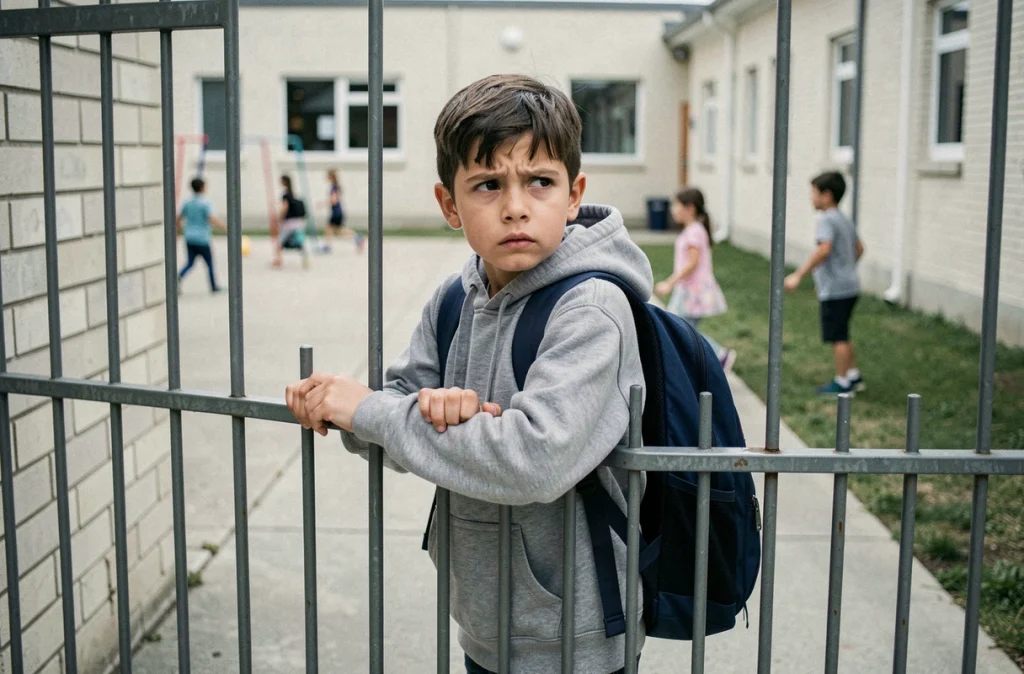
Didaskaleinophobia refers to an intense and persistent fear of school. Far from a morning whim or temporary back-to-school stress, this anxiety disorder physically prevents some children from crossing the threshold of their educational institution. The clinical term is also evolving: many professionals now prefer the term “anxious school refusal,” which refocuses the issue on anxiety rather than on behavior perceived as voluntary.
Anxious school refusal and didaskaleinophobia: why terminology matters
Talking about “school phobia” spontaneously directs one towards the idea of a fear of the school itself. The shift to “anxious school refusal” (ASR) changes the interpretation of the disorder. The child does not refuse school by choice, but due to an inability linked to anxiety. This distinction has direct consequences on how families, teachers, and caregivers approach the situation.
A child labeled as “school phobic” risks being referred to a discipline or motivation issue. A child identified as suffering from an anxiety disorder enters a care pathway. The nuance is not merely semantic: it determines the speed and nature of the intervention.
To better understand the mechanisms at play, a detailed file addresses didaskaleinophobia on Les Enfants De L’Espoir by crossing clinical and parental perspectives.
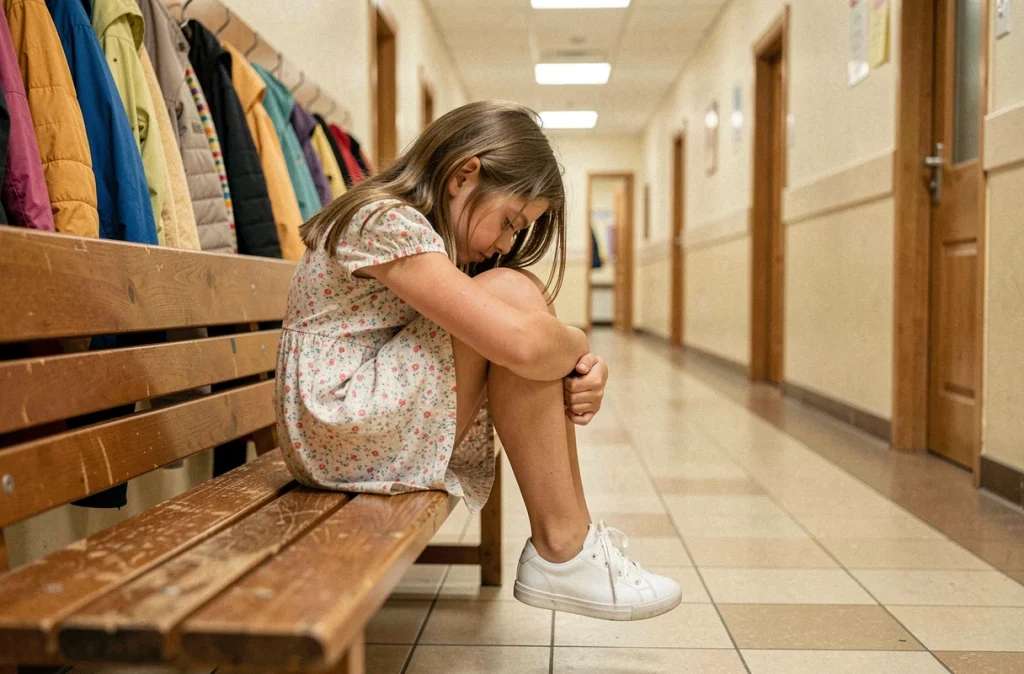
Physical symptoms of anxious school refusal: beyond stress
The most deceptive manifestations of this disorder are somatic. Stomach aches, nausea, headaches, sleep disturbances: these signals often appear before leaving for school and disappear during vacations or weekends. This cyclical pattern is a strong indicator.
The physical symptoms are not feigned. Anxiety produces real physiological responses. The child truly has a stomach ache, and the fact that the pain fades outside the school context does not mean they are lying.
In the most severe forms, panic attacks occur at the moment of departure or as the school approaches. The child may cry, freeze, become aggressive, or run away. These reactions, sometimes dramatic, reflect a level of anxiety comparable to what an adult would feel in a situation perceived as dangerous.
Identifying the shift between normal anxiety and established disorder
A back-to-school apprehension or occasional stress before a test falls under ordinary anxiety. The shift is identified when avoidance becomes systematic and the child develops strategies to avoid attending classes over several weeks.
- Absenteeism gradually sets in, first for a few hours, then entire days, without spontaneous improvement.
- The child expresses disproportionate distress relative to the objective situation (no identified bullying, no major academic failure).
- Recurring physical symptoms resist standard medical consultations, which find no organic cause.
- Social functioning deteriorates: the child withdraws, refuses extracurricular activities, loses contact with peers.
Deep causes of school phobia: what care pathways reveal
The first major French study on the subject, conducted by child psychiatrist Laelia Benoit for Inserm in collaboration with the Phobie Scolaire association, highlighted the diversity of trajectories. Anxious school refusal affects about 1 to 5% of children and adolescents, according to estimates cited by several clinical sources.
Triggering factors are not limited to bullying, although it remains a frequent element. Hypersensitivity, pre-existing anxiety disorders, a family event (separation, bereavement, relocation), or a school environment perceived as insecure can each contribute to the disorder.
The fear of failure as an underestimated driver
One factor regularly emerges in field feedback without always being at the forefront of analyses: the pressure related to academic performance. Some children develop such intense performance anxiety that the evaluation itself becomes the object of the phobia. School, as a place of constant evaluation, then transforms into an overall threat.
This mechanism is distinct from simple “exam stress.” It involves a catastrophic anticipation that invades daily life well before the evaluative deadline, making each school day potentially anxiety-inducing.
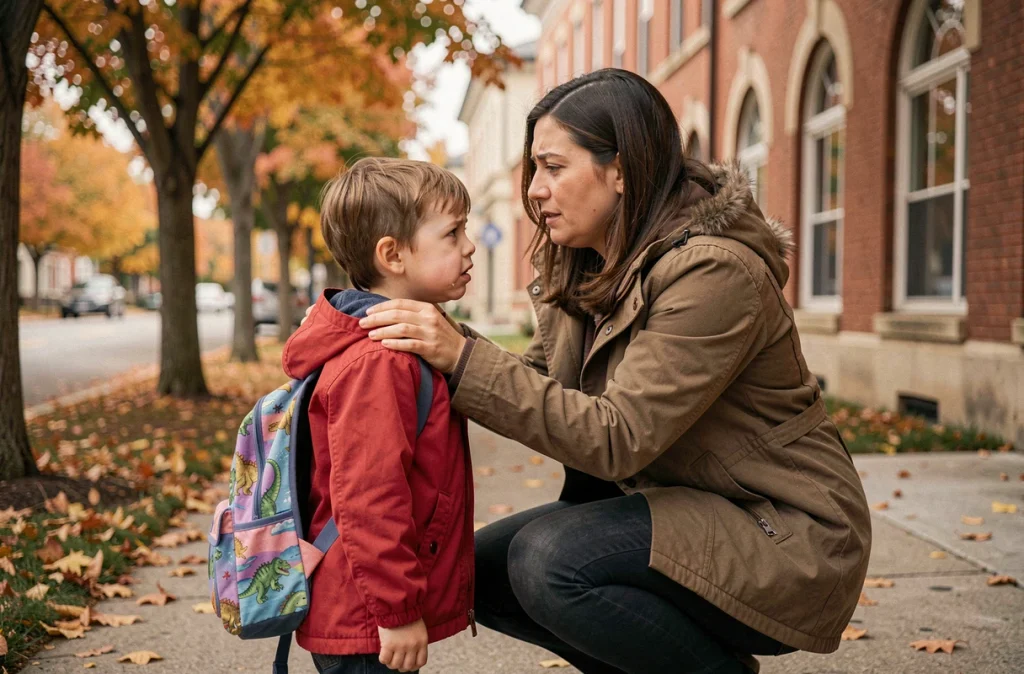
Gradual resumption of schooling: the systems that change the game
Current recommendations for intervention have evolved. An immediate full-time return is counterproductive in the majority of cases. The preferred logic is based on a gradual return, coordinated between the school, family, and caregivers.
In practical terms, this may mean a return for a few hours per week, in subjects or with teachers identified as reassuring, before gradually expanding the time spent. This step-by-step approach aims to desensitize the child without abruptly plunging them back into the anxiety-inducing situation.
Available institutional supports
Several operational systems exist to organize this adaptation without waiting for a complete break in schooling:
- The School Support Pole (PAS) coordinates adjustments within the institution.
- The Mobile Support Teams for Schooling (EMAS) intervene to support educational teams on the ground.
- The ULIS and SESSAD provide adapted frameworks for the most complex situations, with individualized support.
The articulation between these systems and the care pathway (cognitive-behavioral therapy, child psychiatric follow-up) remains the main point of tension. Field feedback varies on the actual fluidity of this coordination, which largely depends on local resources and the responsiveness of the actors.
The back-to-school period particularly crystallizes these difficulties. For a child with anxious school refusal, the start of the school year represents a peak of anxiety that can negate months of progress if the transition is not anticipated with the care team from the summer. Waiting until September to organize adjustments often means losing the first weeks of classes and reinforcing the cycle of avoidance.