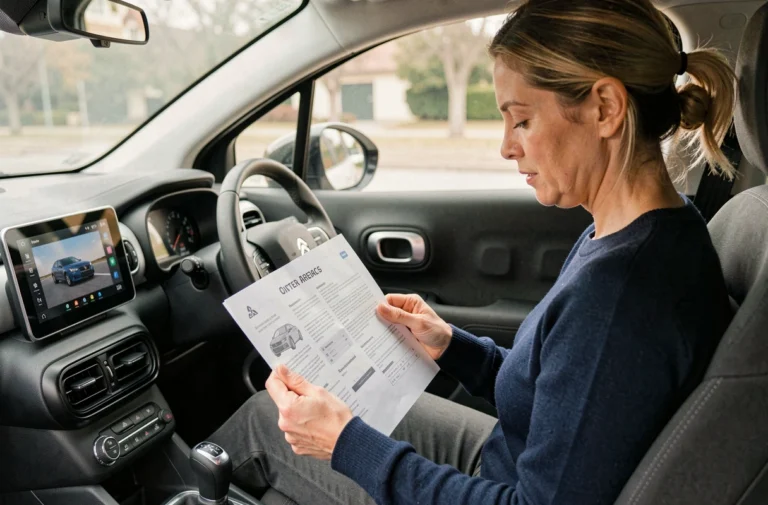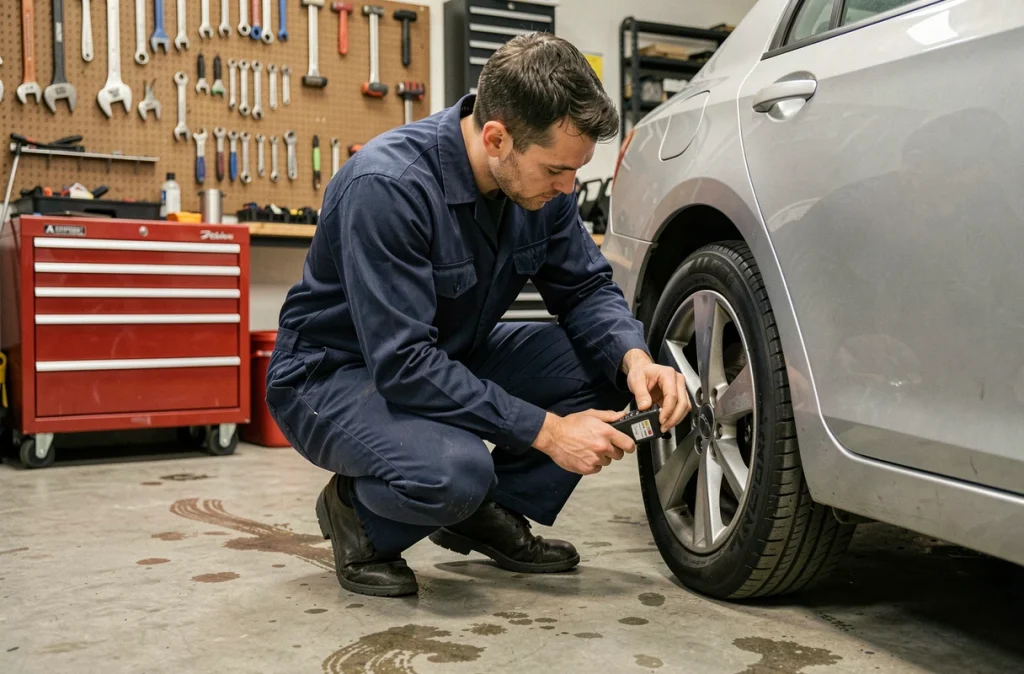
A check engine light coming on while driving on the highway, worn brake pads discovered the day before a long trip, a flat tire noticed too late: most automotive troubles share the same origin, postponed or poorly organized maintenance. Equipping and maintaining your car properly on a daily basis doesn’t require mechanic skills, but a clear method and a few well-chosen tools.
Digital maintenance log: the first tool to install
Before discussing mechanics, we start with a tool that most guides overlook. Maintenance log applications on smartphones have transformed vehicle tracking in recent years. French apps like Ma Voiture or Carmainty centralize the history of interventions, fuel fill-ups, expenses, and most importantly, schedule reminders by mileage and by date.
Carmainty, for example, includes useful technical sheets for daily use: recommended tire pressures, fluid capacities, compatible parts references. Similar functions can be found on AutoSuivi or Odomiq, with additional consumption statistics that help detect mechanical drift before it becomes a costly problem.
The concrete benefit: when selling the vehicle, a complete and timestamped maintenance history reassures the buyer much more than a half-filled paper log. To find the accessories and equipment suitable for your model, you can visit the Équipotto website, which brings together a wide range of automotive products.
Filters and fluids: the intervals that no one really respects
Competitors list all the same fluids to check. The real issue is understanding why some replacement intervals are critical and others are more flexible.
Cabin filter, the great forgotten
We think of engine oil, coolant, sometimes brake fluid. The cabin filter, however, often remains in place well beyond its useful life. A clogged filter degrades ventilation, overloads the air conditioning, and allows pollen and fine particles to pass through. Its replacement takes a few minutes and costs almost nothing.
Brake fluid: a calendar, not mileage
Brake fluid degrades by absorbing moisture, not by mechanical wear. You can drive very little and still have dangerous brake fluid. Replacement is done according to a calendar deadline, not mileage. Many drivers are unaware of this and wait for the mileage service, which can pose a real safety issue, especially in mountainous areas or during rainy weather.
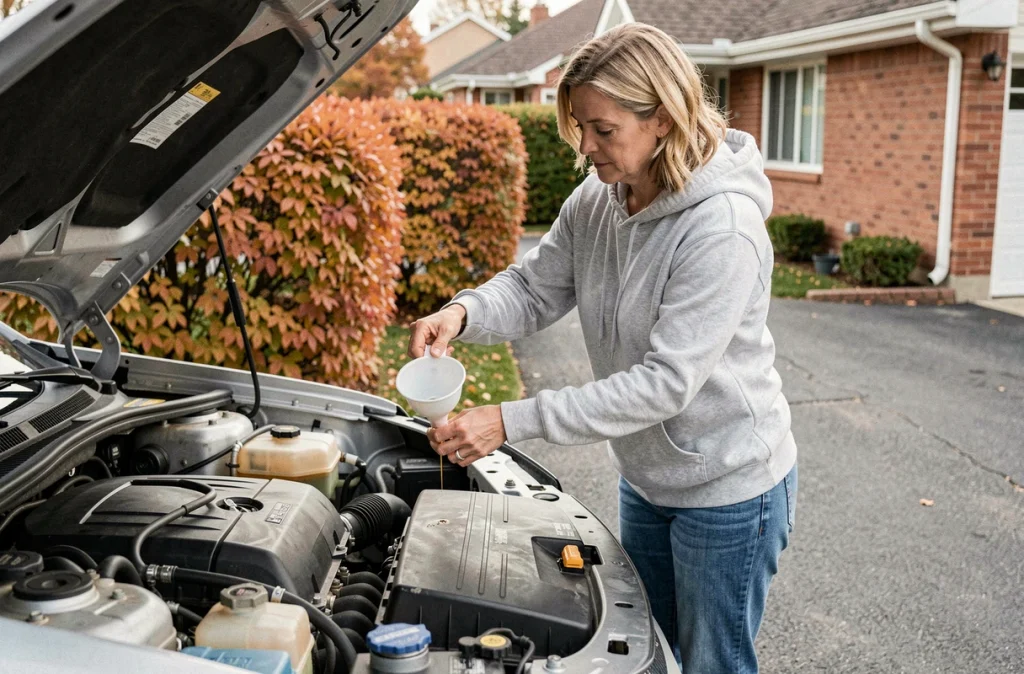
Engine oil: adapt viscosity to usage
Not all engines require the same oil. A vehicle that mainly makes short trips in the city experiences more dilution from condensation than a vehicle driving on the highway. Feedback varies on this point, but using the viscosity recommended by the manufacturer (noted in the log or available via the apps mentioned earlier) remains the basic rule.
Car diagnostics with an OBD device: detect before repairing
OBD devices connected via Bluetooth to smartphones allow you to read the vehicle’s fault codes without going to the garage. An app like Carista, available on the French market, goes beyond simple diagnostics: it offers customization of certain vehicle parameters (light configuration, central locking behavior, comfort settings) and real-time monitoring of engine data.
An OBD device transforms an anxiety-inducing orange light into usable information. You immediately know if the fault is minor (worn lambda sensor, poorly closed fuel cap) or if you need to urgently go to a garage. The cost of an entry-level device is minimal compared to a diagnostic bill at a workshop.
Tires and brakes: the two areas where saving costs dearly
For these two elements, there is no reasonable compromise. A worn or improperly inflated tire significantly increases braking distances, raises fuel consumption, and accelerates uneven wear on the running gear.
Here are the concrete checks to integrate into your routine:
- Check tire pressure at least once a month, when cold, following the values indicated on the label in the door frame (not those engraved on the tire sidewall, which are maximums)
- Check wear with an integrated wear indicator or a simple visual inspection of tread depth, also looking for any asymmetrical wear that would indicate a geometry problem
- Listen to the brakes: a slight squeal when braking may indicate that the wear indicators on the pads have been reached, while a metallic rubbing noise means that the pads are finished and the disc is being damaged
- Have the thickness of the discs checked with each pad change, as a disc that is too thin no longer dissipates heat properly
Replacing pads on time costs a fraction of the price of replacing both pads and discs. This is the maintenance area where procrastination costs the most.
Technical inspection: anticipate rather than endure
The periodic technical inspection remains the most dreaded administrative deadline. The best way to approach it calmly is to do a home pre-inspection a few weeks before the deadline:
- Check all lights (low beams, brake lights, turn signals, reverse light, license plate light) by asking someone to walk around the vehicle
- Ensure that the windshield has no impact in the wiper sweep area
- Visually check the condition of the suspensions (leaks on the shock absorbers, torn steering bellows)
A home pre-inspection significantly reduces the risk of a re-inspection. The most common failures during the technical inspection concern lighting and tires, two points that any driver can check without equipment.
A well-equipped vehicle that is regularly monitored via a digital log, an OBD device, and simple monthly checks rarely holds unpleasant surprises. The cost of these tools and habits remains negligible compared to an avoidable breakdown or a re-inspection at the technical inspection.