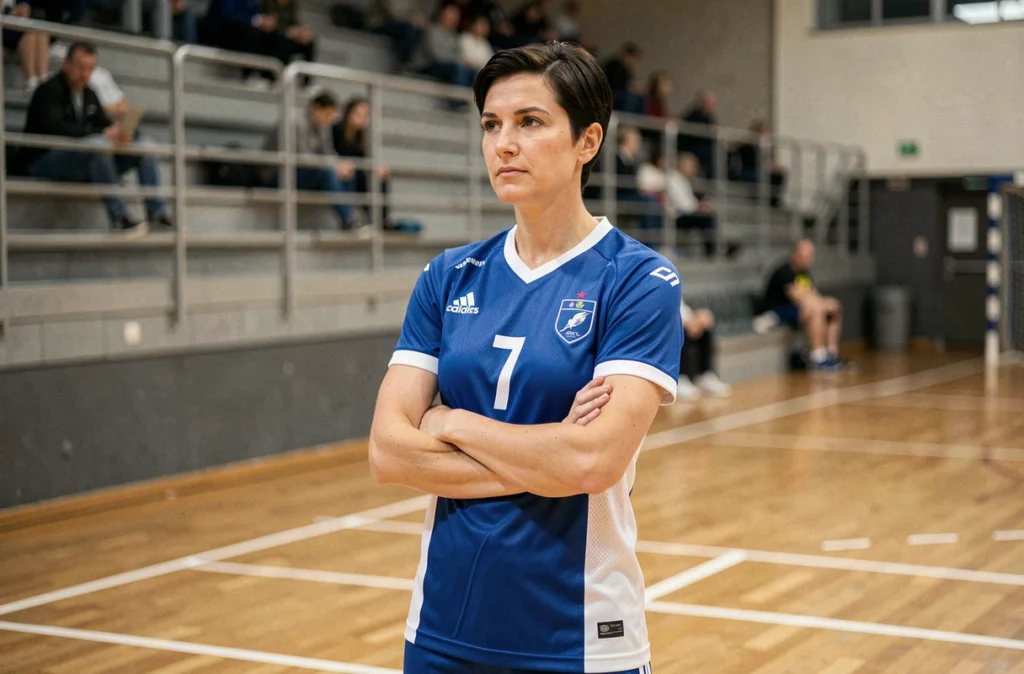
Annie Brosterhous is a former basketball player who played for Cavigal Nice in National 1 during the 1980s, and later became a physical education teacher. Many websites, however, present her as a figure in French handball, a factual error that has propagated through successive copies.
Handball or basketball: a confusion that persists around Annie Brosterhous
Why do so many web pages associate Annie Brosterhous with handball when her documented sports career places her on the basketball courts? The answer lies in the mechanics of online publication: a first article makes a disciplinary error, and subsequent ones replicate it without further investigation.
Verifiable elements link her to French basketball in the 1970s and 1980s. She played for Cavigal Nice, a historic club in women’s National 1. No handball federation, no official record mentions her name in this discipline.
An portrait of Annie Brosterhous available online also perpetuates this association with handball, illustrating how the error continues from one site to another.
This case is not isolated. Several female athletes from the 1980s have their discipline confused in online biographies, especially when their public notoriety comes from a field other than sport itself.
Basketball career at Cavigal Nice: what the sources confirm
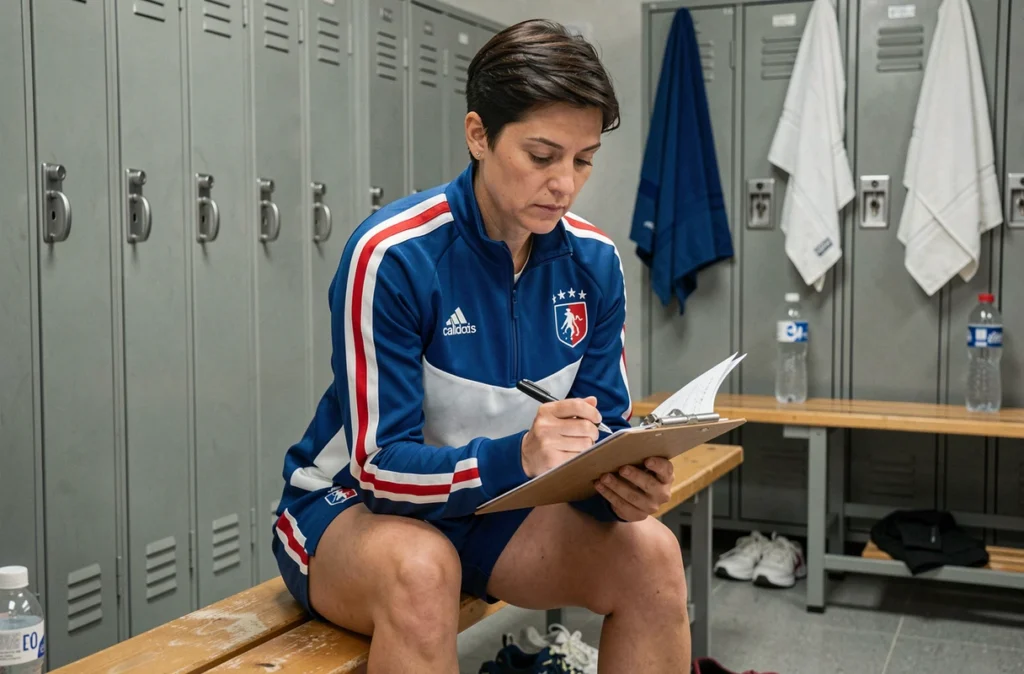
Cavigal Nice is the most solid reference for Annie Brosterhous’s sports career. This Nice club, founded in the early twentieth century, has long been among the active teams in French women’s basketball.
Annie Brosterhous played there in National 1, the highest level of the time. Her career took place during a period when women’s sports were gradually gaining visibility, although they did not benefit from media coverage comparable to that of men’s teams.
After her playing career, she turned to teaching. She became a physical education teacher, a common transition for athletes of her generation who did not have the professional structures available today.
What remains unverifiable
Several sites attribute Olympic participation to her. This claim poses a factual problem: the French women’s basketball team was not qualified for the Olympics before the 2000s. No institutional source confirms an Olympic selection for Annie Brosterhous.
Similarly, her date of birth, height, and any selections for the national team are not based on any verifiable document. The figures circulating are estimates repeated in loops.
- Career at Cavigal Nice in National 1: documented by several consistent sources
- Transition to physical education teacher: confirmed
- Participation in the Olympics: unconfirmed and likely inaccurate
- Selection for the French national basketball team: no official source identified
Arsène Wenger and notoriety by proxy
The reason Annie Brosterhous appears in search results has less to do with her sports career than with her relationship with Arsène Wenger. The former Arsenal coach, a major figure in world football, was married to her.
The couple married after several years of living together. They have a daughter named Léa, who pursued studies at Cambridge. Their separation dates back to 2015.
The media coverage of this relationship has overshadowed Annie Brosterhous’s own sports career. Articles dedicated to her generally devote the majority of their content to Arsène Wenger, reducing her biography to that of a famous wife.
A common pattern in women’s sports
This phenomenon goes beyond the individual case. Many female athletes from the 1970s and 1980s have become invisible in digital archives. When their names resurface, it is often through association with a more media-covered male personality.
French women’s basketball from that era suffers from a lack of documentation. Records are incomplete, and club archives are sometimes lost. This leaves room for approximations and disciplinary confusions.
Verify before publishing: the problem of online biographies
The case of Annie Brosterhous illustrates a recurring flaw in the French-speaking web. Erroneous information (here, the association with handball) spreads because each new writer relies on existing articles rather than primary sources.
The same formulations appear almost word-for-word from one site to another, a sign of a chain of successive copies rather than a verification effort.
- No handball federation lists Annie Brosterhous in its accessible archives
- Sites that label her as a “handball player” never cite a federal source or record
- Reliable information is limited to Cavigal Nice, her teaching, and her family life
For anyone interested in the biographies of French female athletes, caution is warranted when facing pages that compile data without sourcing. The distinction between what is documented and what is automatically repeated remains the only reliable filter. Annie Brosterhous indeed made her mark on French basketball at her level, at Cavigal Nice, before building a career in teaching. Attributing her a handball career is simply a mistake of sport.