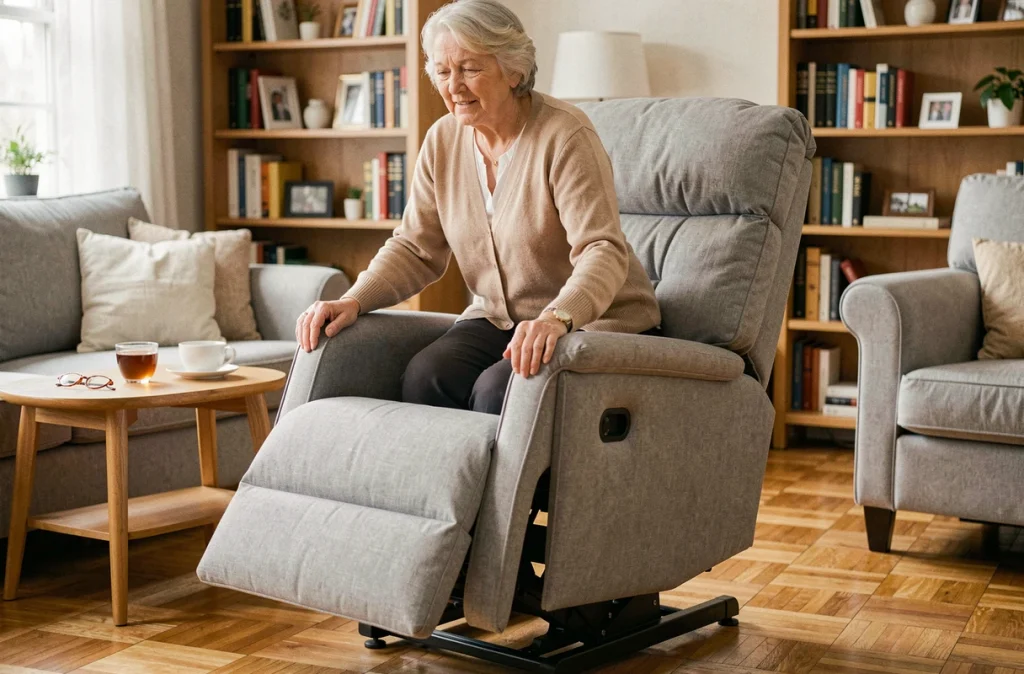
The lift chair for the living room is not listed in the List of Reimbursable Products and Services (LPP). Without an assigned LPP code, no medical prescription triggers reimbursement from Health Insurance, regardless of whether the buyer has a recognized disability. Confusion persists because other medical seating options (shell chairs, wheelchairs) are included in the LPP and qualify for coverage.
Lift chair and LPP code: why the nomenclature blocks reimbursement
The LPP catalogs the medical devices that Health Insurance agrees to cover. Each product is listed under a specific code, associated with a responsibility rate and prescription conditions. The lift chair for the living room does not have any LPP code, making any electronic transmission of invoices to the primary fund impossible.
We regularly observe the same misunderstanding: a pharmacist or medical equipment dealer bills a lift chair by coding it as a shell chair (which is listed in the LPP). The insured then receives a partial reimbursement, but this is a coding error, not a right. If the fund audits the file, it may demand a refund of the overpayment.
The question of reimbursement for the lift chair by social security often comes up in insured forums. The technical answer remains the same: without registration in the LPP, neither a prescription from a primary care physician nor from a specialist is sufficient to establish a right.

Wheelchair reform of December 2025: an even clearer boundary
Since December 1, 2025, Health Insurance has become the sole funder of wheelchairs listed in the LPP, with full reimbursement with no out-of-pocket costs for purchase and maintenance. This reform has raised hopes among buyers of lift chairs, but it exclusively concerns vehicles for disabled persons (VPH).
The distinction is clear: a wheelchair adapted for loss of autonomy can now be fully covered. A lift chair of the living room type remains a comfort device, even in cases of significant dependence. The reform has paradoxically widened the gap between the two categories of seating.
Lift chair without recognized disability: assistance available outside social security
The absence of a recognized disability by the MDPH does not close all doors. It excludes the Disability Compensation Benefit (PCH), but several assistance programs remain accessible depending on the buyer’s situation.
- The APA (Personalized Autonomy Allowance) concerns individuals aged 60 and over classified in GIR 1 to 4. The assistance plan established by the departmental medico-social team may include the purchase of a lift chair for home maintenance, without requiring MDPH recognition.
- Retirement funds (CARSAT, MSA, CNRACL) offer one-time assistance for home adaptations. The lift chair may fall within this framework if an occupational therapist or doctor justifies its utility for fall prevention.
- The CCAS (Communal Center for Social Action) of the municipality sometimes has social assistance funds for the elderly. The amount varies greatly from one community to another, and the process involves an individual application file.
- Some mutual insurance companies include a “healthy aging” or “comfort equipment” allowance in their contracts. The level of coverage depends on the subscribed contract, and we recommend checking the conditions before purchase.
The medical estimate: a often overlooked lever
Even without coverage by Health Insurance, a detailed estimate prepared by an authorized medical equipment dealer significantly strengthens an assistance file. This estimate must specify the model, technical characteristics (number of motors, lift function, upholstery), and the total price including tax.
Accompanied by a medical prescription (even if not reimbursable), this estimate formalizes the medical need with the retirement fund, CCAS, or departmental council. Without a structured medical estimate, most organizations refuse to process the request.

Shell chair or lift chair: the confusion that costs dearly
The shell chair is listed in the LPP. It is prescribed for individuals with severe loss of autonomy, often bedridden or semi-bedridden. Its responsibility rate qualifies for partial reimbursement from Health Insurance, supplemented by mutual insurance.
The lift chair, on the other hand, targets a still mobile audience but struggles to stand up independently. Its main function is the sitting-to-standing transition, not prolonged postural support. Confusing the two products leads to fraudulent coding or, conversely, purchasing an unsuitable shell chair solely to benefit from reimbursement.
We recommend consulting an occupational therapist before purchase. This professional evaluates the functional situation of the person and directs them to the appropriate device, taking into account eligibility criteria for financial assistance.
Medical prescription and lift chair: what it really allows
A prescription for a lift chair does not trigger any reimbursement from Health Insurance. However, it is not useless. The prescription formalizes the medical need and serves as supporting documentation for APA files, requests to retirement funds, and any tax credits related to home equipment.
The prescribing doctor can be the primary care physician or a specialist (geriatrician, rheumatologist, rehabilitation physician). The prescription must mention the pathology justifying assistance with standing and specify that the lift chair meets an identified functional need.
The administrative status of the disability does not affect this prescription. A doctor can prescribe a lift chair to anyone experiencing difficulties standing, regardless of their disability rate or GIR classification. What changes is the funding pathway that can be mobilized afterward.