A poorly closed box that opens on the stairs, a piece of furniture that won’t fit through the door, a cut in housing assistance because the CAF wasn’t notified in time: we all know someone this has happened to. Successfully moving without stress relies less on a checklist of tasks than on a few decisions made at the right time, well before the big day.
Protecting fragile furniture during transport
Most damage occurs to bulky items that we think are solid. A glass tabletop, a designer chair leg, a television screen: these pieces do not handle the vibrations of the truck well if they are not secured individually.
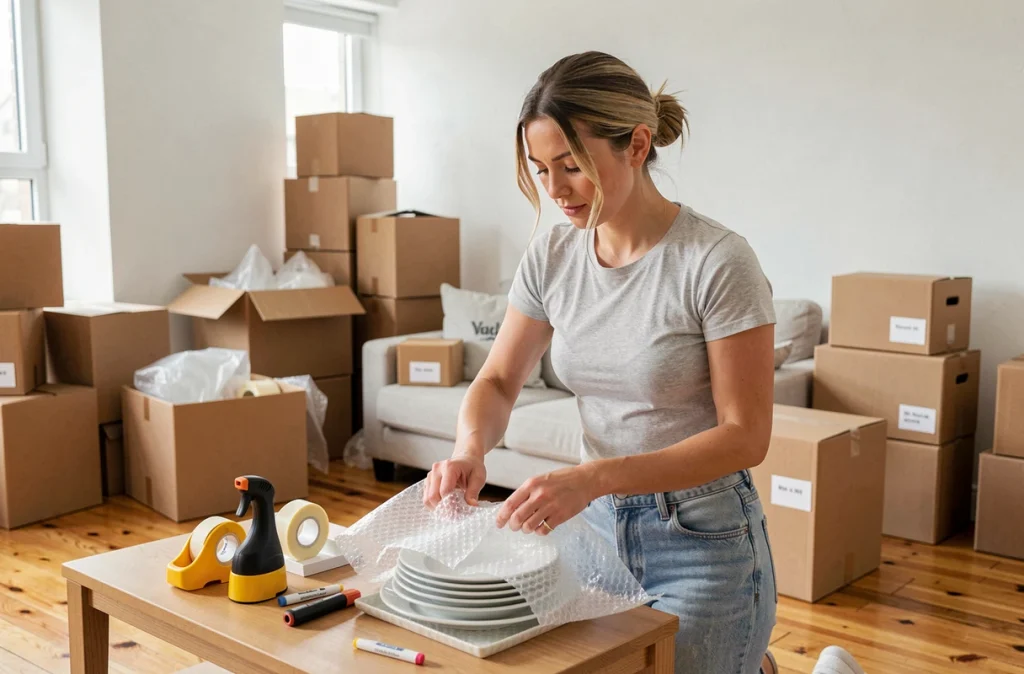
For disassembled furniture, we systematically remove the legs, removable shelves, and glass doors. Each element is wrapped separately in bubble wrap or blankets, then taped with wide adhesive tape. Wrapping each piece separately prevents friction and scratches.
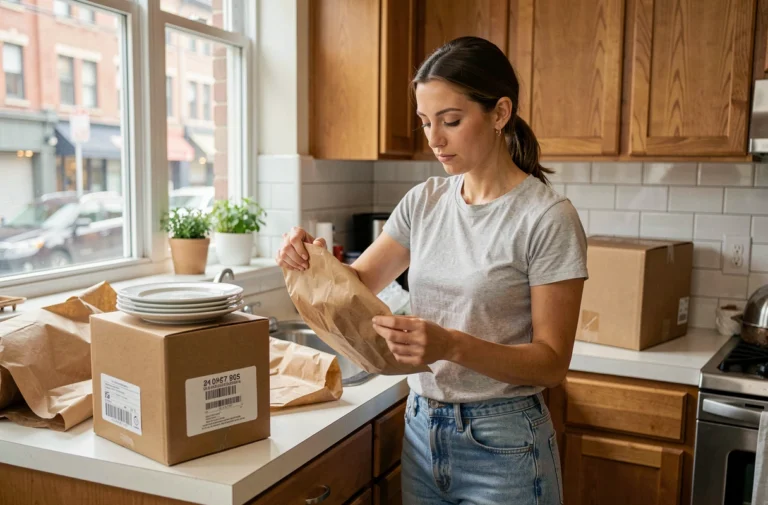
For fragile items (dishes, knick-knacks, frames), we line the bottom of the box with crumpled paper and fill all empty spaces. A box that doesn’t “sound” when shaken lightly is a well-filled box. You can find more information on Cécile Bricole regarding packing techniques and preparing boxes room by room.
The necessary materials are few:
- Bubble wrap on a roll and kraft paper for fragile surfaces and mirrors
- Wide adhesive tape (at least 5 cm) to seal boxes from the bottom as well, not just from the top
- Moving blankets or old sheets to wrap heavy furniture in the truck
- Ratchet straps to secure large items against the walls of the vehicle
Loading the truck: the order that changes everything
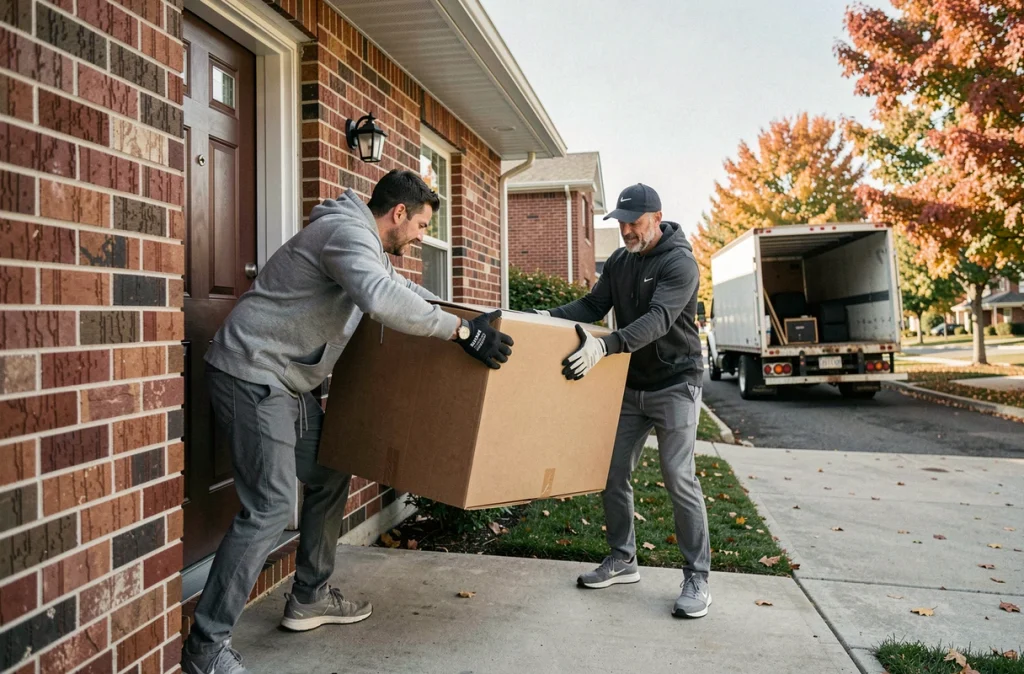
We tend to load the boxes first because they are ready. This is a mistake. The truck should be filled starting with the heaviest and bulkiest furniture, placed at the back against the driver’s side wall. This stabilizes the vehicle’s center of gravity during transport.
Appliances (washing machine, refrigerator) come next, secured vertically. A refrigerator transported lying down risks a leak in the cooling circuit. The refrigerator should always be transported upright and strapped.
The boxes fill the remaining spaces, with the heaviest (books, dishes) at the bottom and the lighter (linens, clothes) stacked on top. We finish with fragile items and plants, which should be accessible last during unloading.
The trap of underestimated volume
We almost always underestimate the number of boxes needed. A two-room apartment easily generates several dozen boxes once the closets are emptied. It’s better to rent a slightly larger truck than planned: a vehicle that is too small forces you to cram items, which increases breakages, or to make two trips, which doubles fatigue and time.
Administrative steps often forgotten after moving
Changing your address with the Post Office or your bank is something most people think about. However, updating your situation with the CAF within a month of moving in is a critical point that many neglect.
Housing assistance (APL, ALF) is linked to a specific residence, not to the person. If you do not declare the new lease and new address in your online account, the payments will simply stop. This interruption can last several weeks while the file is processed, creating a cash flow gap at the worst time.
CAF moving allowance for large families
Since April 1, 2026, the moving allowance paid by the CAF has been increased. The ceiling is set at 1,147.58 euros for three dependent children, increased by 95.63 euros for each additional child. This scale remains valid until March 31, 2027.
The conditions are strict: you must have at least three children (born or to be born), benefit from APL or ALF in the new residence, and above all, submit the application within six months of moving. After this period, the right is definitively lost, with no possibility of appeal.
Organizing boxes by destination room
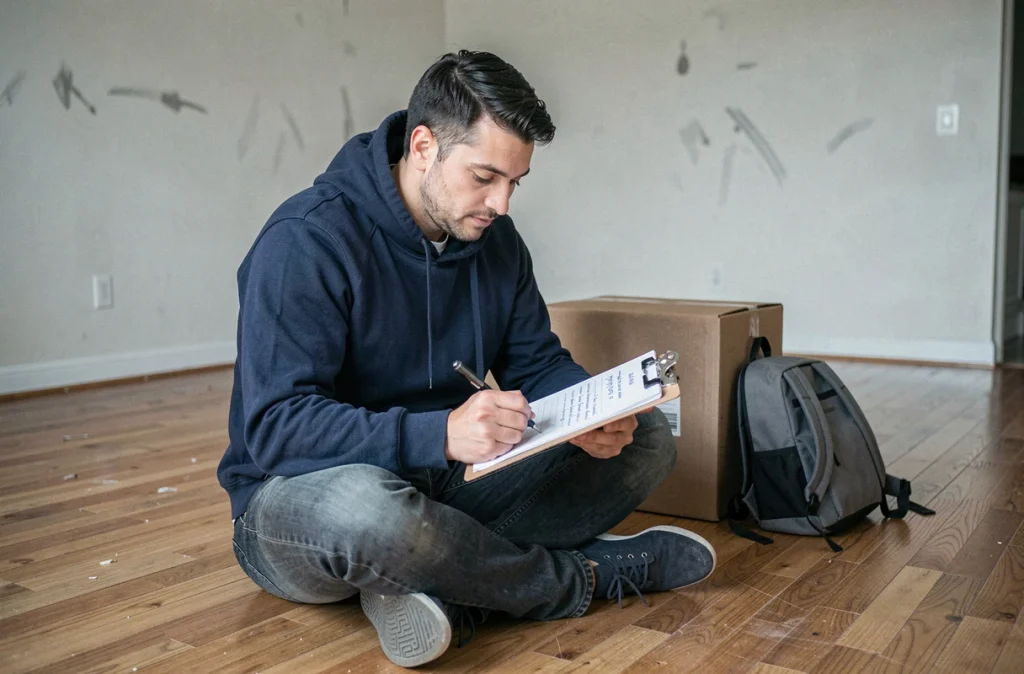
Labeling your boxes “kitchen,” “bedroom,” “living room” seems basic, but the method matters more than the gesture. Write the contents and the destination room on the side of the box, not on the top. Once stacked, only the side faces remain visible.
A color code for each room speeds up unloading: a piece of colored tape on each box allows those unloading to know immediately where to place it, even without reading the label. This saves considerable time when several people are involved.
For boxes containing fragile items, add a visible note (“FRAGILE – TOP”) and ensure they are never placed under a heavy box in the truck. Opinions vary on this point, but many movers also recommend taking a photo of the contents of the most packed boxes before sealing them, to quickly find a specific item without opening everything.
The first night bag in the new home
On moving night, you are exhausted and the boxes are everywhere. Preparing an accessible bag with the essentials for the first night avoids searching for hours.
- Sheets, pillows, and a blanket to sleep even if the bed isn’t set up yet
- Toiletries, towels, toilet paper, and hand soap
- Phone chargers, common medications, and a flashlight in case of a power outage
- Something to eat without cooking (disposable cutlery, water bottle, snacks) while unpacking the kitchen
This bag travels with you in the car, not in the truck. It should be the last loaded and the first retrieved.
A successful move does not depend on the number of hands available on the big day. The real gains come from preparing the boxes, following the loading order, and completing administrative tasks on time. Anticipating these three points reduces most of the stress long before the first piece of furniture leaves the apartment.