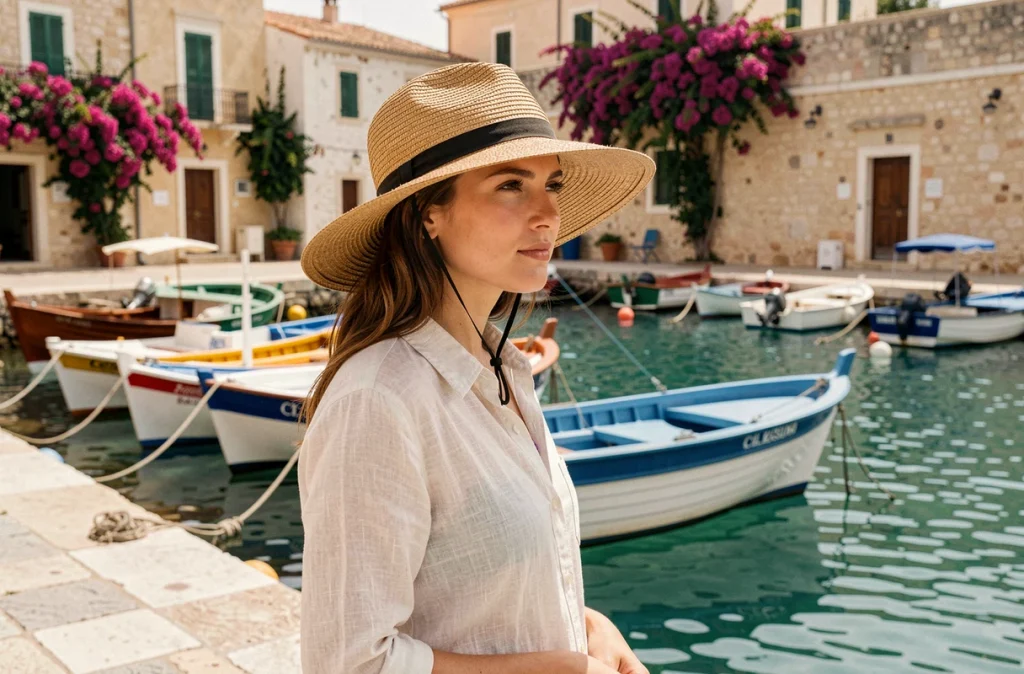
Destination MED refers to a collection of online resources focused on the Mediterranean basin, designed to help travelers prepare for a stay between Southern Europe, the Maghreb, and nearby islands. The principle is based on practical sheets, tested itineraries, and on-the-ground advice that cover everything from formalities to activities on-site.
Traveling in the Mediterranean without flying: the train and ferry alternative
The trend of traveling to the Mediterranean without flying is gaining ground. Itineraries combining high-speed trains, ferries, and travel by bike or on foot allow access to destinations like the Balearic Islands, Tunis, Tangier, or Marseille without long-haul flights. For a novice traveler, this approach reduces the logistical stress associated with airports while offering a gradual immersion into the landscape.
The journey itself becomes part of the adventure. A night ferry between Barcelona and Mallorca, for example, breaks the trip into two digestible stages. The slower pace allows time to acclimatize, locate train stations and connections, and arrive rested rather than jet-lagged.
This type of route is particularly suitable for families or individuals who prefer to avoid boarding lines. However, it remains relevant to check seasonal ferry schedules, as some routes only operate between May and October. To delve deeper into the topic, an article about E-Nomad for travelers details the first steps of a Mediterranean stay without a flight.
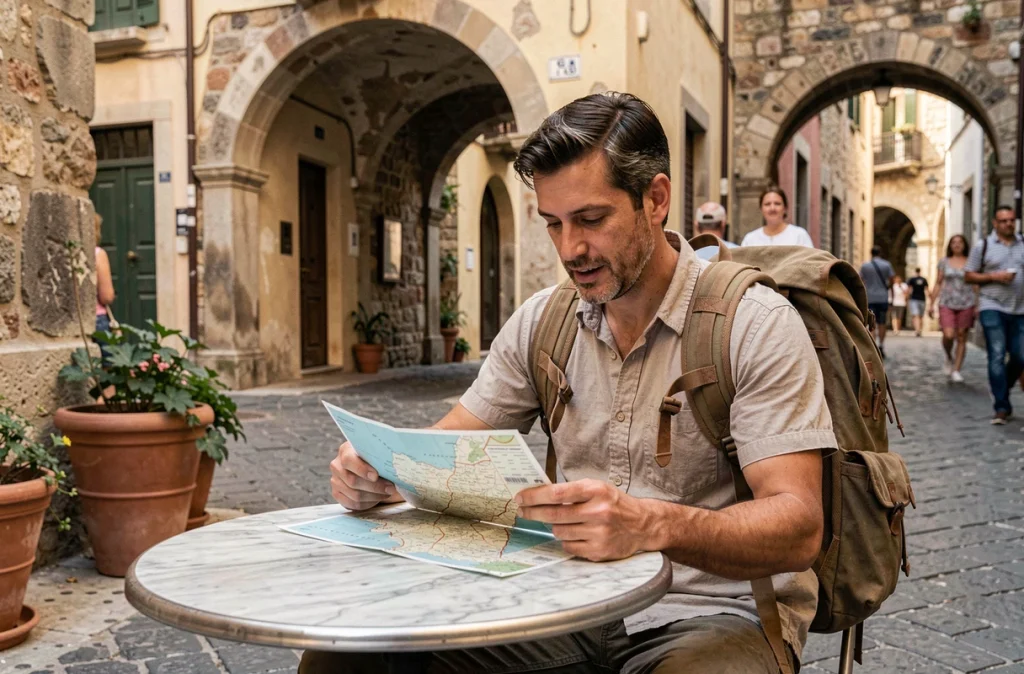
Heat and crowds: choosing your travel period in the Mediterranean
The choice of period directly affects the quality of a first stay. The months of May-June and September-October remain the most comfortable windows for discovering the Mediterranean basin. Temperatures are bearable, beaches are less crowded, and accommodation prices are significantly lower than in the height of summer.
Intense summer heat is leading more and more travelers to reconsider their departure dates. Some coastal regions regularly exceed thresholds that make hiking or simply strolling in the city uncomfortable, especially for children or those not accustomed to hot climates.
Quotas and local access taxes
Several Mediterranean destinations have implemented measures to limit overtourism: daily quotas at certain sites, access fees for the most crowded beaches, and mooring restrictions for pleasure boats. Checking these local regulations before booking avoids unpleasant surprises on-site.
A novice traveler has every interest in favoring the shoulder season not only for the price but to access places that may be closed or limited in July-August. This constraint, rarely mentioned in standard guides, significantly changes the travel experience.
Travel budget Mediterranean: the areas to balance for a first stay
The budget for a Mediterranean stay varies greatly across three areas: transportation, accommodation, and dining. Contrary to what many guides suggest, the flight or journey is not always the heaviest expense. In high season, a night in a hotel on a Greek island or in Sardinia can cost as much as a round-trip plane ticket.
- Ground transportation on-site (car rental, local buses, water taxis) often represents an underestimated cost, especially on islands where rates rise in summer.
- Accommodation in an apartment or guesthouse, booked several months in advance, remains the most economical solution for families.
- Dining in inland villages costs significantly less than on the coast, with often superior local cuisine quality.
Eating inland rather than on the waterfront allows for a more authentic culinary experience while reducing expenses. This simple reflex transforms the value for money of a stay.
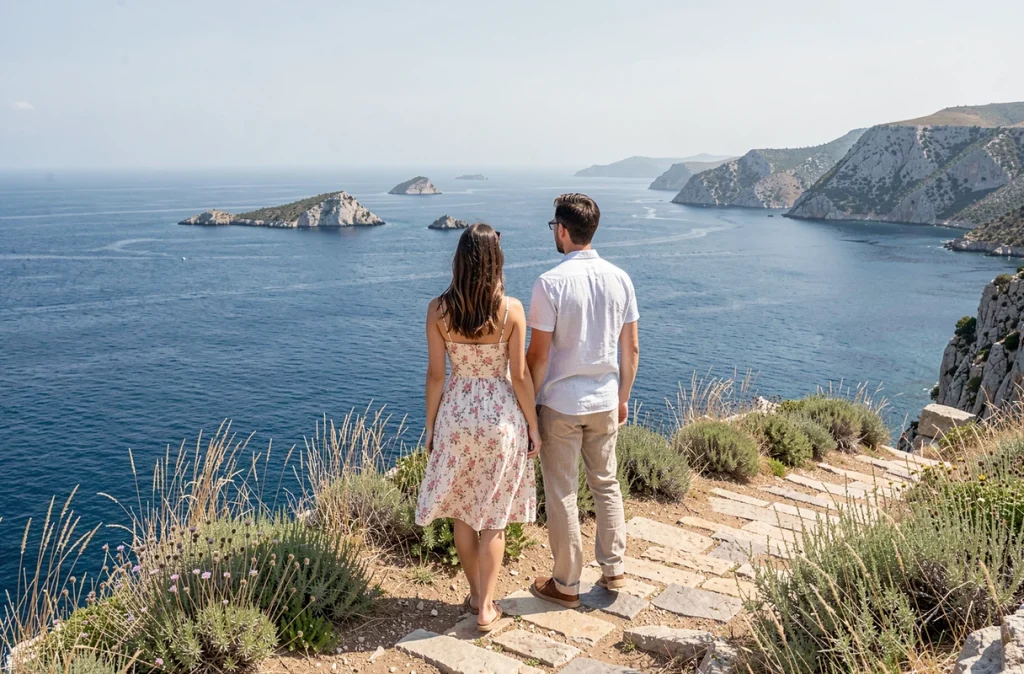
Hiking and gentle activities: starting the adventure in the Mediterranean
The adventure in the Mediterranean is not limited to beaches. The basin offers varied terrain for beginner-friendly hiking: marked coastal trails, customs paths, routes between perched villages. The required level remains moderate on most classic itineraries, provided the season is chosen wisely.
Water activities (sea kayaking, snorkeling, paddleboarding) naturally complement walking. They require no prior experience and are offered in almost all seaside resorts, often with guidance suitable for families.
Preparing a first discovery itinerary
A first trip benefits from simplicity. Focusing your stay on a single region, rather than trying to cover three countries, allows for a genuine enjoyment of the places without spending half the time in transit.
- Choosing a fixed base (a village or small town) and radiating out on day trips reduces logistical fatigue.
- Planning at least one day without a specific agenda leaves room for the unexpected, which often creates the best travel memories.
- Consulting specialized resources like Destination MED helps identify trails suited to your level and points of interest accessible without a car.
A common mistake for beginners is overloading the schedule. A successful stay relies on an adapted pace, not on the number of sites visited. Two or three memorable discoveries are worth more than a rushed ten stops.
The Mediterranean remains one of the most accessible playgrounds for a first adventure trip. Land and sea connections are developing, online resources are becoming clearer, and off-season destinations offer a quality-experience ratio that few other regions of the world can provide so close to France.