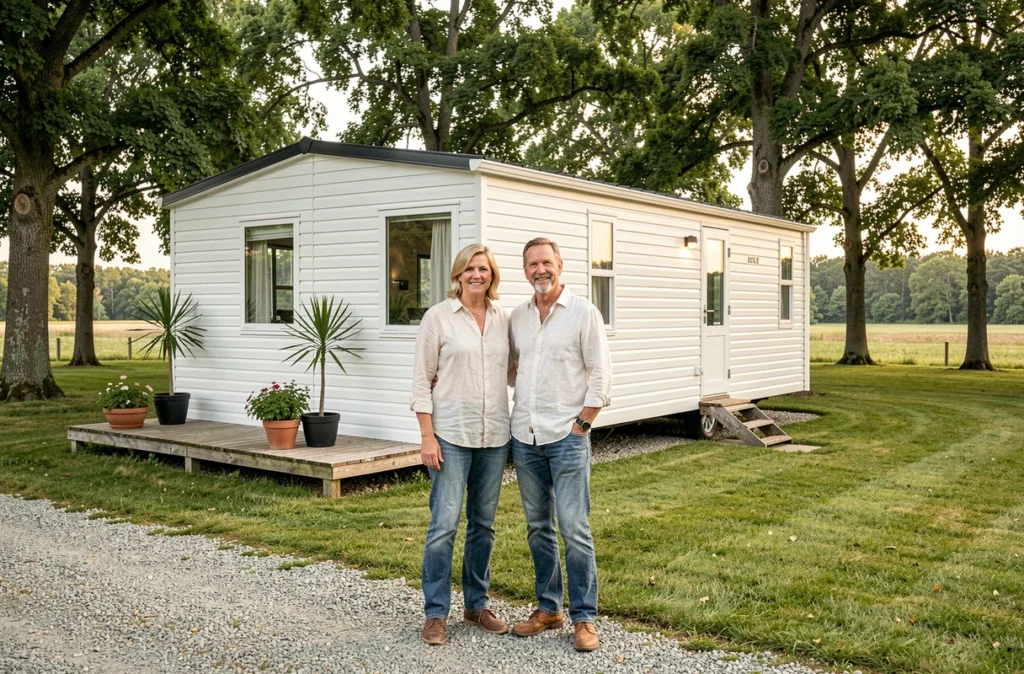
A couple buys a mobile home at a good price, installs it on a pitch at a three-star campsite, and discovers when the contract comes up for renewal that the annual site fee has risen by several hundred euros. A plot with a mobile home is appealing because of its low entry cost, but its true profitability depends on factors that the purchase price alone does not reveal.
Restrictions on installing a mobile home on a plot: what the legal status requires
You cannot put a mobile home just anywhere. The French Urban Planning Code classifies a mobile home as a leisure mobile residence, which strictly limits where it can be installed to classified campsites and certain residential leisure parks (PRLs) with specific permits.
Buying agricultural land or a building plot in the belief that you can install a mobile home there without any formalities leads to an administrative dead end. The land must be zoned and approved for this use; otherwise, the project simply cannot go ahead.
This restriction changes the equation for anyone considering investing in a plot with a mobile home: you are not buying a conventional property, but a movable asset placed on a rented pitch. The value of the mobile home is therefore inseparable from the contract between its owner and the campsite or PRL operator.

Pitch fees and recurring costs: the real impact on profitability
The purchase price of the mobile home, whether new or used, is only part of the equation. Every year, the owner pays a pitch fee to the campsite, and this charge can be increased without a uniform regulatory cap.
Other fixed costs add to the pitch fee:
- Insurance, which must reflect the property’s actual use (seasonal rental, personal use, or winter storage). A mismatch between the policy and actual use may result in a claim being denied.
- Routine maintenance (waterproofing, plumbing, decking), which becomes more expensive as the mobile home ages, since it depreciates like a vehicle rather than real estate.
- Property management fees if you let the campsite handle rentals, often charged as a commission on rental income.
The annual pitch fee has a greater impact on long-term net profitability than the purchase price. A moderately priced mobile home at a campsite where fees rise regularly can end up costing more than a pricier model at a site with stable charges.
Mobile home depreciation: a frequently underestimated factor
A new mobile home loses a significant portion of its value within the first few years. Unlike an apartment or building plot, it does not appreciate over time. When you sell, you recover only a fraction of the original price, and that fraction decreases every year.
Choosing a used mobile home limits the initial loss in value. The difference in purchase price is often substantial, while a recent, well-maintained model can offer comparable quality for rental use.
Seasonal rental income: what it takes for the numbers to add up
Seasonal rentals are the main way to offset costs. Occupancy rates depend directly on the campsite’s location, facilities, and the area’s tourist appeal.
A well-rated campsite close to the coast or a major tourist attraction, with a swimming pool and entertainment, can keep its mobile homes occupied for a longer season. A more remote site without distinctive facilities may struggle to secure more than a few weeks of bookings a year.
To estimate profitability, compare net rental income (after campsite commission, expenses, and insurance) with total annual costs (pitch fee, maintenance, and depreciation). This calculation often reveals a more modest return than the gross figures advertised by some operators, which leave out depreciation and actual expenses.
Climate risk and campsite operating continuity
One factor rarely included in the calculation is that climate risk can affect the campsite’s operations. Floods, storms, or droughts may lead to temporary closures or even operating restrictions. Investors can then lose rental income even if their mobile home is undamaged and insured.
Checking whether the campsite is located in a flood-risk area and reviewing local safety requirements are essential precautions before making any commitment.
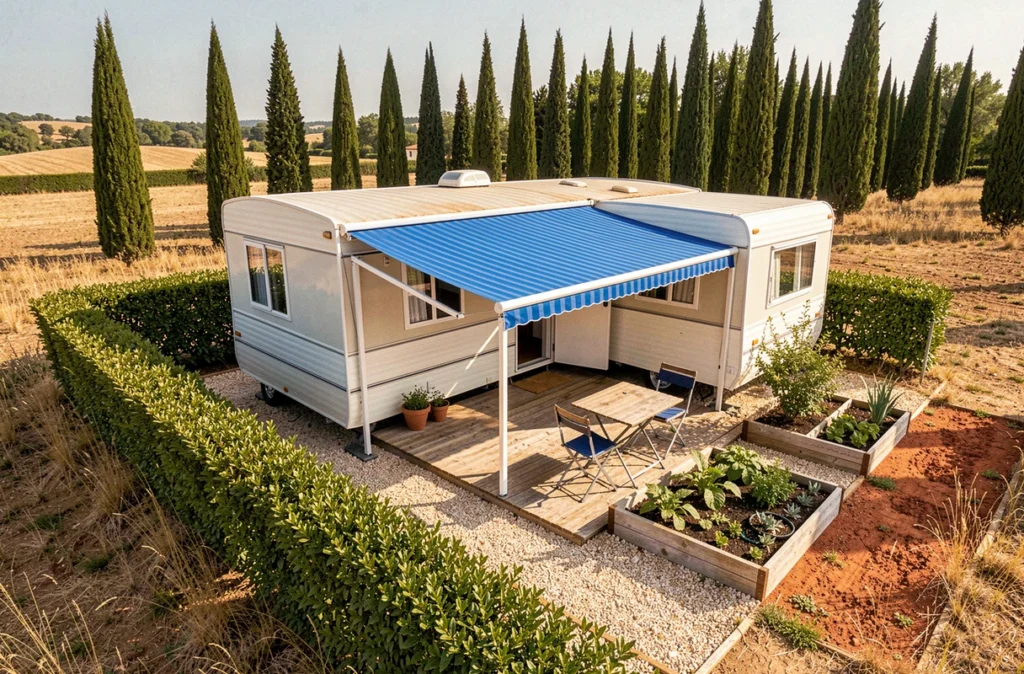
Plot with a mobile home: investor profile and holding period
This type of investment is not comparable to traditional rental property. A mobile home does not generate a capital gain when resold, does not form part of an inheritable land asset, and remains dependent on the campsite operator’s willingness to renew the pitch contract.
However, the calculation changes for someone looking to replace paid holidays with a property they can use every year. Savings on summer holidays, combined with a few weeks of rental income, can make the investment worthwhile over a long holding period.
For a plot with a mobile home to live up to expectations, several conditions must be met:
- A campsite with stable operations, a clear pitch contract, and predictable fees.
- A tourist location that ensures sufficient occupancy throughout the season.
- A recent used mobile home to limit initial depreciation and maintenance costs.
- Insurance suited to actual use, reviewed every year against the campsite contract.
The holding period plays a decisive role: the longer you keep the mobile home, the lower the average annual cost, provided expenses remain under control. Over a short period, depreciation absorbs most of the rental income, leaving you with a net loss.