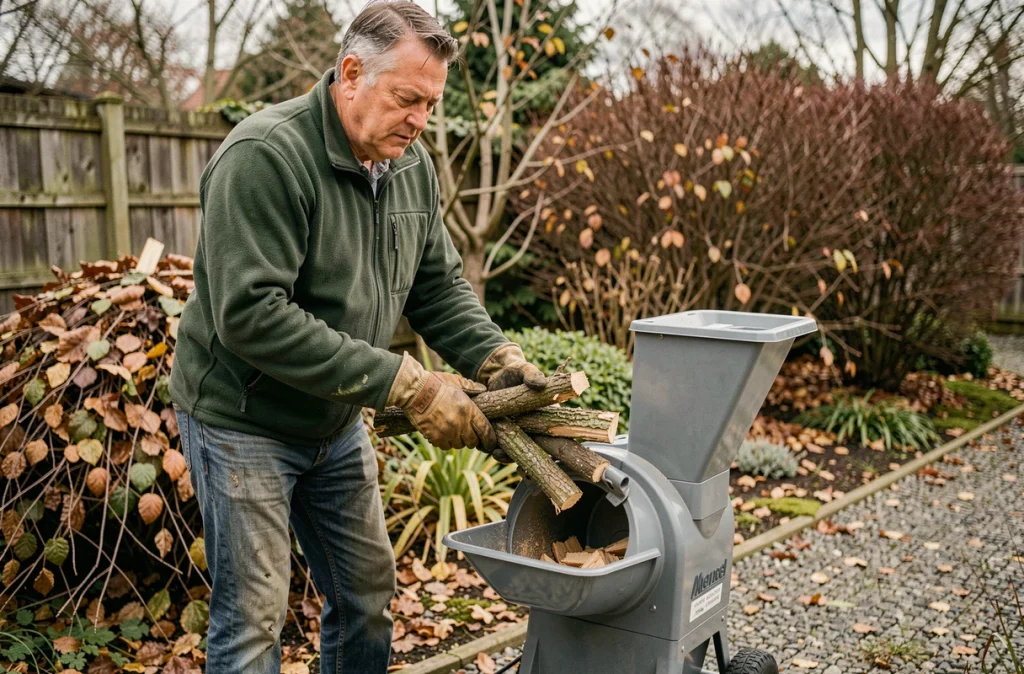
The choice of a shredder for producing mulch is not reasoned like a classic shredder purchase. The particle size of the shredded material directly affects its ability to cover the ground, limit evaporation, and decompose at the right pace. We recommend starting from the expected result at the foot of the plants and then working back to the machine, rather than the other way around.
Particle size of the shredded material and behavior on the ground: the criterion that comparisons ignore
Fine shredding, less than a few centimeters, forms a dense layer that hinders the emergence of weeds and retains moisture. Coarse shredding allows light to pass through, dries quickly on the surface, and is better suited for composting than for mulching flower beds or vegetable gardens.
The destination of the shredded material must be decided before purchasing the machine. A blade disc shredder produces irregular, often fibrous chips suitable for paths but less homogeneous for surface mulching at the base of perennials. A rotor or turbine generates more uniform shredding, directly spreadable.
We regularly observe that gardeners invest in a powerful shredder capable of handling large sections, while their actual need is for processing hedge trimmings and fruit tree branches. When comparing vegetable shredding solutions from the perspective of mulching, the maximum allowable diameter matters less than the uniformity of the resulting shredded material.
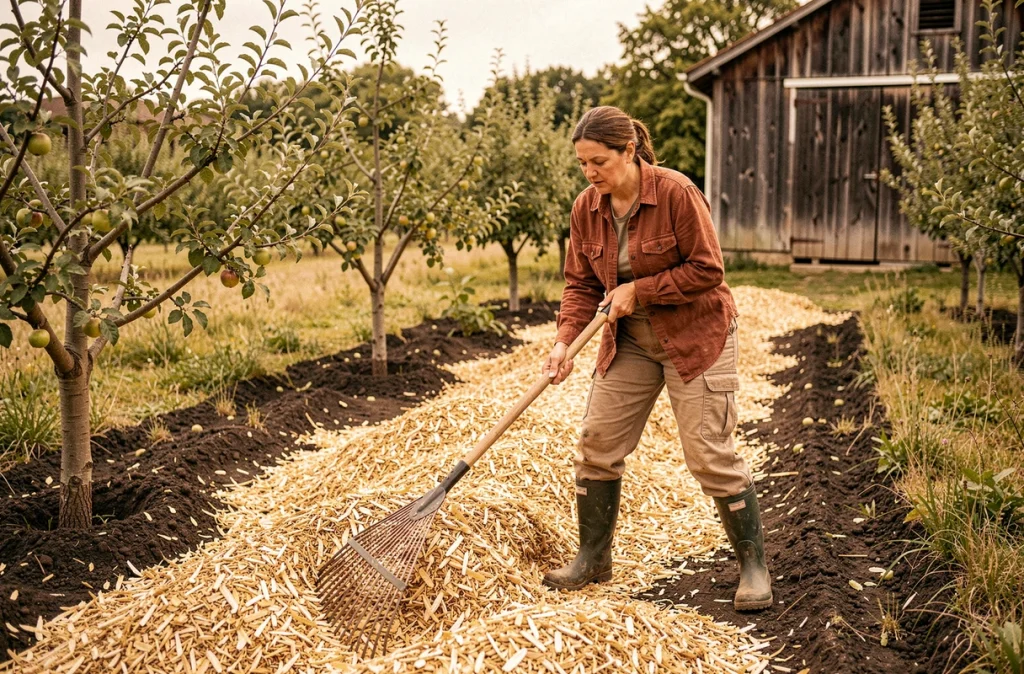
Cutting system suitable for mulching: disc, rotor, or turbine
The shredding system determines the final texture. Each mechanism has a specific area of use for mulching.
- Blade disc: spins at high speed, cutting small-diameter branches into chips. Heterogeneous shredding, acceptable for paths or tree bases, but too coarse for a vegetable garden. High noise level.
- Rotor (cutting cylinder): crushes and cuts branches through compression. Produces more uniform shredding, directly usable for surface mulching. Accepts larger sections. However, it can jam with very green and soft materials like fresh hedge trimmings or tender foliage.
- Turbine: combines shearing and suction. Offers the best compromise between shredding fineness and tolerance to different types of vegetation. Generally more expensive machines, but the result is usable without prior sorting or drying.
For use focused on mulching flower beds and vegetable gardens, we recommend the rotor or turbine. The blade disc remains relevant if the volume of green waste is low and if the shredding is intended solely for paths.
Electric or thermal shredder for consistent mulching
The motorization does not change the quality of the shredding, but it conditions the frequency of use and the volume treatable per session. A wired electric shredder is sufficient for most domestic gardens. Its power covers hedge trimmings, fruit tree branches, and cleaning waste from flower beds.
The thermal shredder is justified when the garden area requires long sessions, far from any outlet, with large-diameter branches. For mulching, this scenario is rare: the plants intended for mulch are rarely thick sections.
An electric rotor shredder between 2,000 and 2,500 W covers most domestic mulching needs. Cordless models (battery-powered) gain in mobility, but their autonomy and torque lag behind for extended shredding sessions.
The trap of advertised power
The power in watts does not directly translate to useful shredding capacity. The torque of the mechanism, the rotation speed, and the design of the feed hopper weigh equally in the final result. A powerful motor combined with a poorly designed blade disc will produce mediocre shredding for mulching.
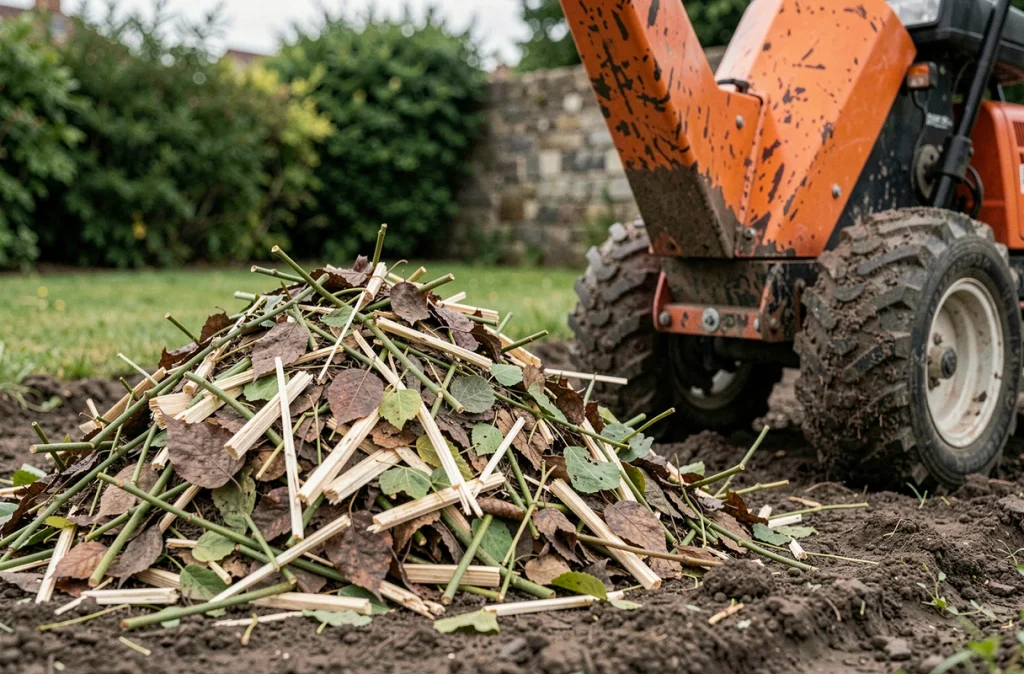
Spreading the shredded material: usage window and common mistakes
Freshly shredded material intended for mulching must be spread within 48 hours. Left in a pile, it heats up, begins to compost, and loses its soil-covering properties. This constraint is rarely mentioned in buying guides, but it directly influences the organization of shredding sessions.
Shredded fruit branches are well-suited for mulching under trees and in paths, provided that visibly diseased wood is removed. Another precaution: never place the mulch layer against the collar of plants and trees. A few centimeters of space prevents issues of stagnant moisture and rot.
Thickness and renewal frequency
A layer of shredded material thick enough to block light effectively hinders the germination of weeds. Renewing the mulch once or twice per season keeps the coverage active, as fine shredding decomposes faster than mineral mulch or pine bark.
This decomposition is not a flaw: it nourishes the soil with organic matter and improves soil structure over the seasons. Leafy shredding, richer in nitrogen than conifer shredding, decomposes more quickly but provides more nutrients.
Maintenance of the shredder and quality of mulching over time
Dull blades or a rotor produce shredded material that is torn rather than cut. The torn fibers dry poorly, form a mat on the surface, and reduce the permeability of the mulch to rainwater. Sharpening or replacing the blades after each major shredding session ensures clean and functional shredding.
On rotor models, regularly check the gap between the cylinder and the counter-blade. An excessive gap allows unshredded pieces to pass through, which disrupts the particle size of the mulch. Turbine shredders require less intervention, but their mechanism is more expensive to replace in case of advanced wear.
The choice of a shredder for mulching is based on a reasoning opposite to that of classic buying guides: starting from the desired shredding texture, checking compatibility with the available plants in the garden, and only then deciding between motorization and budget. A well-maintained rotor on a medium-powered electric shredder remains, for most gardens, the most coherent configuration.